


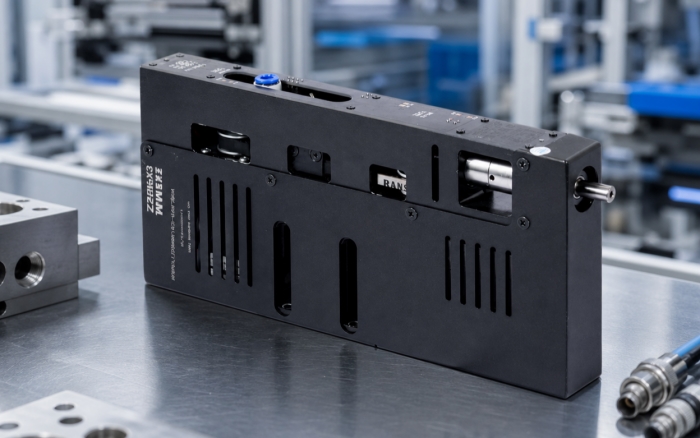
Modern industrial automation systems require compact, reliable, and efficient motion components to improve equipment performance. However, traditional motion designs often require multiple separate components for different movement functions, which can increase mechanical complexity and installation difficulty. Therefore, selecting a suitable actuator has become an important step for automation manufacturers who want to optimize machine design. The integrated stepper linear rotary actuator combines linear and rotary motion capabilities into one compact structure, providing a practical solution for space-limited automation applications. By integrating motion functions into a single module, it helps reduce system complexity while maintaining stable positioning performance.
For OEM manufacturers and automation suppliers, Zrvrobot develops motion solutions that support efficient equipment development. The ZREMM8-X3 series is designed to simplify automation architecture while providing consistent operation for long-cycle industrial applications.
Consider Application Requirements Before Selecting An Actuator
Before choosing an actuator, manufacturers need to consider factors such as installation space, movement requirements, operating frequency, and system compatibility. Different automation applications may require different motion characteristics, so selecting the correct actuator configuration can directly influence equipment efficiency. For example, labeling machines, material processing equipment, and micro-component handling systems often require precise repetitive movements within limited spaces. Therefore, a compact actuator with integrated functions can provide advantages compared with traditional solutions that use multiple motion components.
The ZREMM8-X3 series is designed for applications that require:
- Compact installation design: Suitable for equipment with limited internal space.
- Stable stepper control: Provides consistent positioning for repetitive automation tasks.
- Combined linear and rotary movement: Reduces the need for separate motion modules.
- Long-cycle operation capability: Supports continuous production environments.
- Simplified equipment integration: Helps reduce mechanical design workload.
Consequently, manufacturers can create more efficient automation equipment with fewer mechanical connections and reduced assembly requirements.
Key Factors For Choosing The Right Integrated Motion Module
Selecting the correct motion component requires evaluating both technical performance and application demands. Moreover, the actuator should match the machine structure to achieve reliable operation.
When choosing the ZREMM8-X3 series, manufacturers should focus on the following aspects:
- Movement Function Requirements
First, determine whether the application requires both linear and rotary movement. An integrated structure is especially valuable when equipment needs multiple motion directions within a limited installation area. - Space Optimization Needs
Furthermore, compact automation equipment benefits from smaller motion modules. The integrated design helps save installation space while reducing additional mechanical parts. - Production Stability Requirements
In addition, repetitive industrial operations require consistent motion performance. The stepper-based control system supports stable positioning during continuous production cycles. - System Integration Efficiency
Finally, reducing component complexity can shorten machine development time. Integrated solutions allow OEM manufacturers to simplify mechanical design and improve equipment deployment efficiency.
Comparison Of Different Motion Solutions
Different actuator structures provide different benefits depending on automation requirements. The following table shows how integrated motion modules compare with traditional separate component solutions.
| Feature | Traditional Motion Combination | ZREMM8-X3 Integrated Actuator |
|---|---|---|
| Motion Structure | Requires separate linear and rotary components | Combines multiple movements in one module |
| Installation Space | Requires more mechanical space | Compact design for limited spaces |
| System Integration | Higher design complexity | Simplified equipment integration |
| Maintenance Requirements | More connection points | Reduced mechanical complexity |
| Automation Applications | General industrial use | Precision repetitive automation tasks |
As shown above, an integrated design can provide better flexibility for manufacturers developing compact and efficient automation equipment.
Improving OEM Equipment Design With Integrated Motion Technology
The demand for smarter and more compact automation systems continues to grow. Therefore, manufacturers need motion components that provide both functional flexibility and simplified integration. The integrated stepper linear rotary actuator helps OEM equipment designers reduce the number of separate motion elements while maintaining accurate movement control. Additionally, it supports scalable machine development for various industrial applications.
The ZREMM8-X3 series provides value in applications such as:
- Swing plate positioning systems
- Labeling automation equipment
- Film and material processing lines
- Micro-component handling systems
- Auxiliary assembly operations
- Packaging automation modules
- Pick-and-place automation systems
Moreover, its compact architecture allows engineers to create cleaner machine layouts and improve overall equipment efficiency.
Enhancing Automation Efficiency With Zrvrobot Motion Solutions
As industrial production becomes more demanding, automation systems need reliable components that can operate consistently over long periods. Therefore, choosing the right actuator is essential for maintaining production quality and reducing integration challenges. Zrvrobot focuses on providing motion solutions that support OEM manufacturers and automation suppliers. Through compact design, stable control performance, and simplified integration, the ZREMM8-X3 series helps customers develop more efficient industrial equipment. Furthermore, integrated motion technology can reduce assembly complexity and improve machine development efficiency. This allows manufacturers to respond faster to changing production requirements while maintaining reliable automation performance.
Conclusion: Selecting The Right Actuator For Future Automation Needs
Choosing the correct actuator requires a balance between motion performance, installation requirements, and system efficiency. For compact industrial equipment, an integrated solution can provide significant advantages by combining multiple functions into one reliable module. The integrated stepper linear rotary actuator offers a flexible approach for automation applications that require precise movement, compact structure, and simplified system design. With its stable stepper control and integrated architecture, the ZREMM8-X3 series provides an effective solution for modern automation equipment development.