


In modern automation systems, engineers evaluate motion performance through several key parameters. Among them, effective stroke plays a critical role. In an effective zr axis module, effective stroke refers to the usable motion range that directly contributes to production tasks. Therefore, it affects how efficiently the system performs actions such as labeling, picking, and micro-component handling. In addition, engineers distinguish effective stroke from theoretical travel distance because real production only depends on usable motion space.
How Stroke Design Influences Production Efficiency
An effective zr axis module achieves higher productivity when designers optimize stroke usage. For example, when the module uses its stroke efficiently, it reduces unnecessary movement between working points. Meanwhile, inefficient stroke design increases idle travel and lowers cycle efficiency. As a result, production capacity changes even when speed settings remain the same. Therefore, engineers focus on stroke utilization instead of only increasing motor speed.
Stroke Efficiency in High-Speed Micro Applications
In high-speed applications such as labeling, film processing, and micro-component placement, stroke efficiency directly impacts throughput. An effective Z-axis module improves performance when it shortens non-productive motion paths. In addition, it supports faster transitions between working positions. Therefore, manufacturers achieve higher output without increasing mechanical load or system speed. Meanwhile, compact designs help reduce response delay and improve stability.
Zrvrobot ZRCMM8-P10 Series in Compact Automation
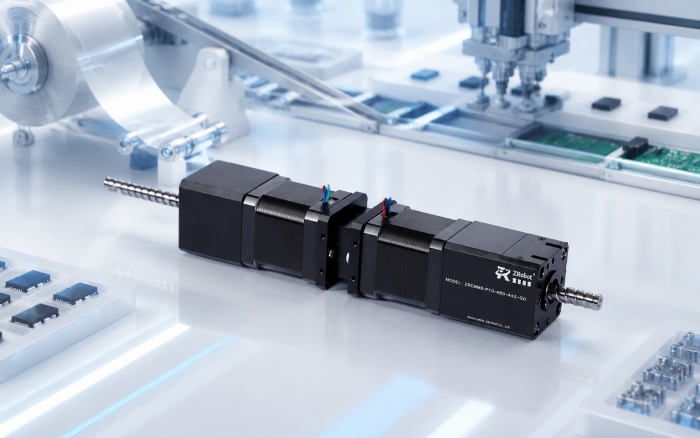
Zrvrobot designs compact motion solutions such as the ZRCMM8-P10 Series Compact High-Cost-Effective ZR Axis Module. This module features an ultra-small structure, medium air path design, and high-speed motion capability. In addition, it supports labeling, film application, patch processing, auxiliary material handling, and micro-component loading and unloading. As a result, it delivers stable performance in space-limited automation systems while maintaining strong production efficiency.
How Effective Stroke Impacts Real Output Capacity
An effective Z-axis module increases production capacity when it converts more of its stroke into productive motion. For example, optimized stroke design reduces return travel and idle positioning time. Meanwhile, poor stroke utilization forces the system to repeat unnecessary movement. Therefore, production output decreases even if the system runs at high speed. In contrast, optimized stroke usage improves cycle time and boosts overall throughput.
Balancing Compact Design and Functional Range
Compact systems like the ZRCMM8-P10 require careful balance between size and working range. Engineers reduce unnecessary stroke length to improve responsiveness. However, they also ensure enough motion range for multi-task operation. Therefore, an effective zr axis module must balance compact structure and operational flexibility. In addition, proper mechanical design helps maintain both precision and efficiency in real applications.
Motion Coordination and System Optimization
In multi-axis automation systems, motion coordination plays an important role. When controllers synchronize movements effectively, an effective zr axis module reduces redundant motion paths. In addition, optimized acceleration and deceleration settings improve cycle consistency. As a result, the system achieves stable production output while maintaining precision. Meanwhile, intelligent control strategies further enhance efficiency in continuous operation.
Conclusion
In conclusion, effective stroke directly determines real production capacity in an effective zr axis module. It influences motion efficiency, cycle time, and overall system throughput. Moreover, Zrvrobot solutions such as the ZRCMM8-P10 Series show that compact design combined with optimized stroke usage can significantly improve automation performance. Therefore, engineers must carefully design and evaluate stroke efficiency to achieve high-output modern manufacturing systems.