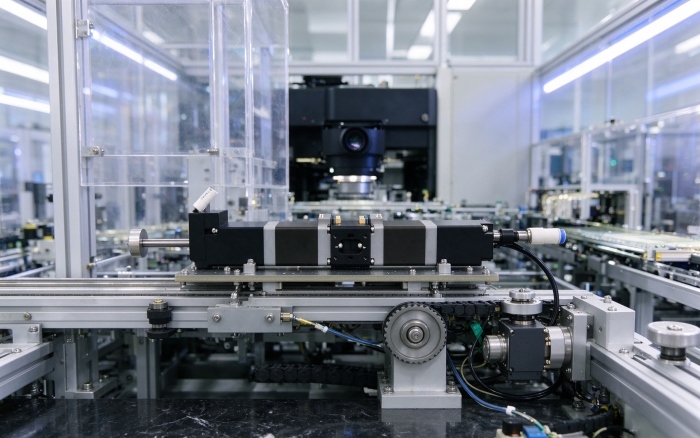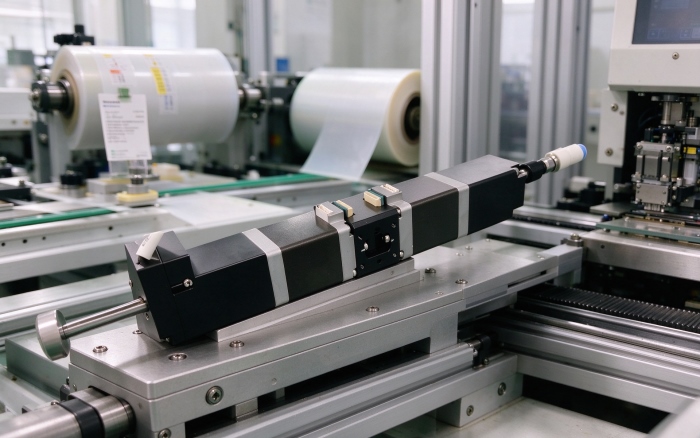


3C manufacturing involves numerous automated processes that require fast movement, accurate positioning, and consistent operation. Applications such as labeling, film application, patch processing, and micro-component handling often involve limited installation space and repeated motion cycles. Therefore, motion components must provide suitable mechanical structures and reliable control capabilities to meet production requirements. A precision compound actuator combines multiple motion functions in a compact configuration, making it a relevant solution for automation equipment that requires coordinated movement and high positioning accuracy.
Why Is Servo-Driven Motion Important in 3C Automation?
Servo-driven motion control plays an important role in automated production because it allows equipment to manage movement through coordinated motor operation. In 3C manufacturing, small components and thin materials may require carefully controlled positioning during processing and transfer. Consequently, a servo-based motion system can help equipment achieve more consistent movement behavior and support repeated production operations.
Traditional motion arrangements may require separate components to perform different movement tasks. However, an integrated servo-driven structure can combine multiple motion functions within one module, helping simplify mechanical arrangements. This approach is especially useful for production equipment that must balance movement requirements with limited installation space.
How Does a Dual ZR-Axis Servo System Improve Motion Control?
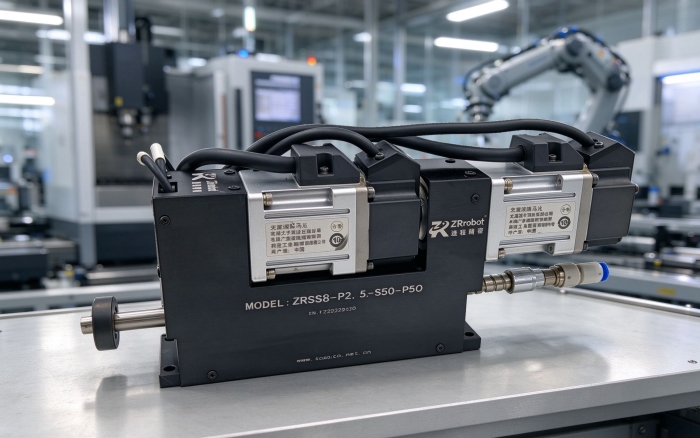
The ZRDSS8-P2 Series features a dual ZR-axis servo system designed to support coordinated motion control. Its configuration combines Z-axis and R-axis movement functions, allowing the module to address applications that require different movement directions. Moreover, the R-axis is designed for ultra-high positioning accuracy, making the system suitable for precision-oriented automation processes. A precision compound actuator also helps integrate coordinated movement functions into a single module, making it suitable for compact 3C automation equipment.
For manufacturers evaluating a precision compound actuator, the coordination between different axes is an important consideration. A dual-axis servo arrangement can help reduce the need to organize separate motion components for each movement function. As a result, equipment designers can develop more integrated machine structures for applications involving small-part positioning, material placement, and automated handling.
Why Does an Ultra-Thin Structure Matter in Compact Equipment?
Installation space is a common challenge in 3C automation equipment. Production lines often contain multiple mechanical modules, sensors, feeding mechanisms, and control components within a relatively limited area. Therefore, an ultra-thin actuator structure can provide greater flexibility when arranging equipment components and designing compact machinery.
The ZRDSS8-P2 Series adopts an ultra-thin body to support installation in space-limited environments. In addition, its integrated dual-servo configuration helps combine motion functions within a compact module. Compared with arrangements that use multiple independent components, this design can make mechanical integration more straightforward and support more efficient equipment layout planning.
What Technical Features Support High-Speed Production?
High-speed production requires motion components to operate consistently throughout repeated automation cycles. However, operating speed alone does not determine whether a module is suitable for a specific application. Positioning accuracy, movement coordination, mechanical dimensions, and pneumatic design must also be considered when selecting an actuator.
The ZRDSS8-P2 Series combines several characteristics for industrial automation:
| Technical Feature | Description | Application Value |
|---|---|---|
| Servo configuration | Dual ZR-axis servo system | Supports coordinated motion |
| Body structure | Ultra-thin design | Helps save installation space |
| Operating characteristics | High-speed operation | Suitable for fast-cycle automation |
| R-axis performance | Ultra-high positioning accuracy | Supports precision-oriented tasks |
| Pneumatic design | Medium air path | Supports stable airflow and smooth motion |
| Module configuration | Integrated ZR-axis structure | Helps simplify equipment integration |
Furthermore, a precision compound actuator can be useful when equipment designers need to balance high-speed operation with limited installation dimensions. The combination of a thin body and dual-axis servo control provides a practical configuration for machinery that performs repeated positioning and handling tasks.
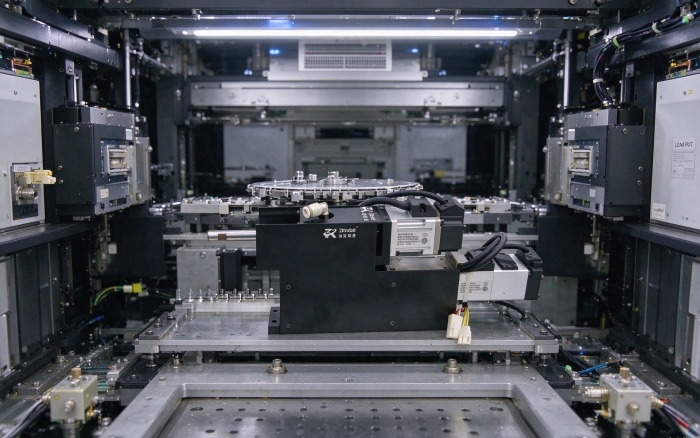
Which 3C Automation Applications Can Use This Actuator?
The ZRDSS8-P2 Series is designed for applications that involve material placement, processing, and small-component handling. Its dual-axis servo structure and ultra-thin body make it suitable for equipment where coordinated movement and compact installation are important. Typical application areas include:
- Labeling automation: Supports positioning operations during automated label application.
- Film application: Provides motion support for thin-film processing and placement equipment.
- Patch application: Can be integrated into machinery used for patch and adhesive processing.
- Auxiliary material handling: Supports the movement and placement of auxiliary production materials.
- Micro-component handling: Suitable for pick-and-place processes involving small components.
- Automated loading and unloading: Supports coordinated movement in material transfer operations.
In these applications, an integrated compound actuator can help equipment manufacturers combine different movement functions within a more compact mechanical arrangement. Nevertheless, the final selection should be based on the required movement sequence, installation conditions, and machine design.
How Should Manufacturers Select a Compound Actuator Manufacturer?
Choosing a suitable compound actuator manufacturer requires more than comparing product dimensions and speed descriptions. Manufacturers should review the actuator’s motion configuration, positioning requirements, installation structure, and suitability for the intended automation process. It is also important to confirm pneumatic connections and system integration requirements before incorporating the module into production equipment.
When evaluating an electric actuator for a 3C production line, equipment designers should consider the following factors:
- Motion requirements: Confirm whether the application needs coordinated Z-axis and R-axis movement.
- Positioning requirements: Evaluate the accuracy needed for labeling, placement, and micro-component handling.
- Installation space: Check whether an ultra-thin module is suitable for the available mechanical layout.
- Operating conditions: Consider the required production cycle and movement frequency.
- System integration: Confirm servo control arrangements and pneumatic requirements with the equipment provider.
Conclusion
High-speed 3C automated production requires motion components that combine suitable positioning performance, coordinated movement, and compact mechanical design. The ZRDSS8-P2 Series addresses these requirements through its ultra-thin body, dual ZR-axis servo system, high-speed operation, and high-accuracy R-axis control. Developed for labeling, film application, patch processing, and micro-component handling, it provides a specialized motion solution for equipment designers seeking more integrated automation structures.