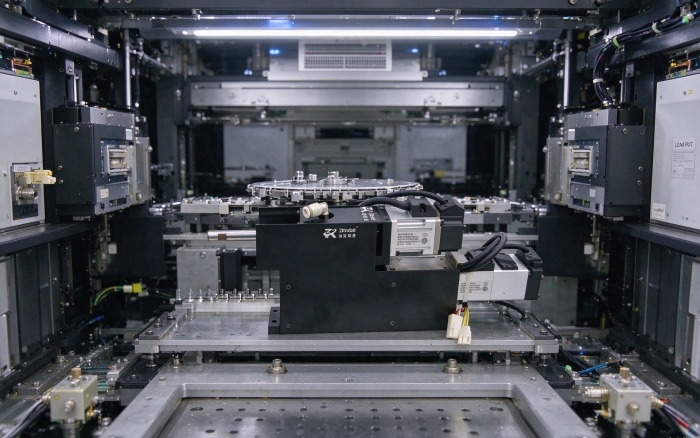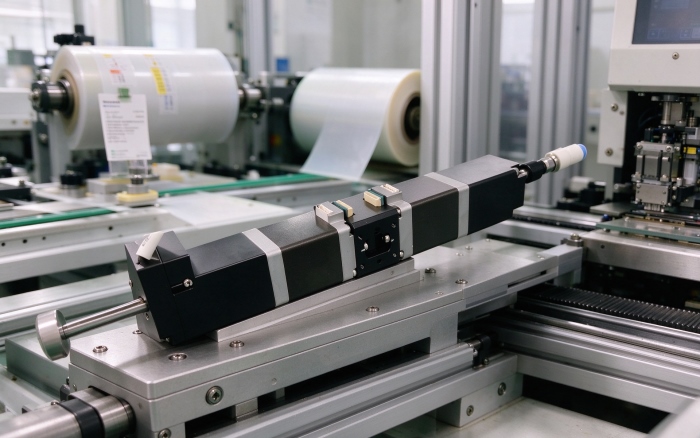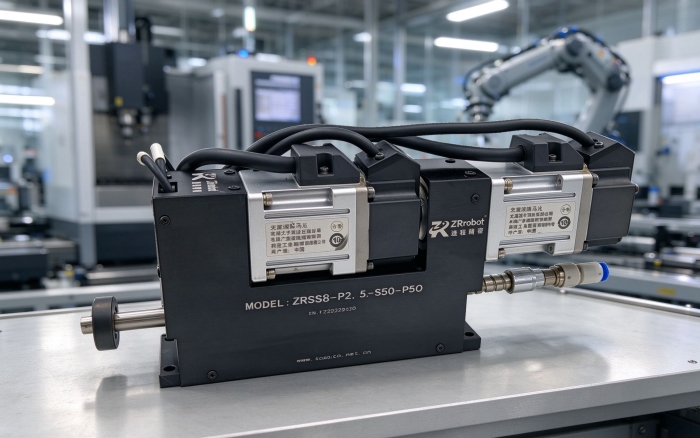


Industrial automation equipment increasingly requires motion components that combine compact dimensions, fast operation, and flexible movement. Traditional single-axis modules are commonly used to perform linear or rotary movements separately, but some applications require more than one type of motion within a limited installation space. An integrated compound actuator offers an alternative by combining different movement functions into a more compact mechanism. For applications involving labeling, film application, patch processing, and micro-component handling, a compact compound actuator can help simplify equipment arrangements and support more efficient motion operations.
What Is the Difference Between Compound Actuators and Single-Axis Modules?
Traditional single-axis modules are designed to perform movement along one primary axis. When an automation process requires both linear and rotary actions, manufacturers may need to arrange multiple motion components together and coordinate their operations through the control system. This configuration can increase installation requirements and make mechanical integration more complicated, particularly in machines with limited internal space.
By comparison, an integrated compound actuator combines multiple movement functions within one actuator structure. Rather than treating each movement as an entirely separate mechanical unit, this approach provides a more consolidated solution for applications requiring coordinated motion. Therefore, it can reduce the need for separately arranged motion components and help equipment designers simplify the overall mechanical layout.
How Does an Integrated Structure Save Installation Space?
Space utilization is an important consideration when designing compact automation equipment. In applications such as micro-component handling and precision material placement, the available installation area may be limited by other mechanical and electrical components. A compact compound actuator addresses this requirement through its ultra-small structural design, making it suitable for equipment where installation space is restricted.
Moreover, integrating motion functions into one actuator can help reduce the number of separately arranged modules. This may simplify mechanical connections and create more flexibility when planning the internal structure of automated machinery. For manufacturers developing compact production equipment, this design approach can be especially useful when balancing movement requirements with available installation space.
Why Is High-Speed Motion Important in Automated Production?
Production equipment often performs repeated movements during labeling, film application, patch application, and material handling. In these processes, the motion component must respond to operating commands while maintaining stable movement behavior. A high-speed compound actuator is relevant to applications where rapid movement is an important part of the production cycle.
The ZRCMM6-P6 Series is designed with an ultra-small volume, medium air path, and high-speed operation. Its pneumatic design supports fast movement in suitable automation applications, while its soft-landing capability helps reduce impact during motion. Consequently, it suits processes involving delicate components, where controlling impact during handling is important.
What Technical Advantages Does the ZRCMM6-P6 Series Provide?
The ZRCMM6-P6 Series from Zrvrobot is an ultra-small high-speed linear rotary actuator developed for industrial automation applications. Its design combines compact dimensions, high-speed operation, and cost-effectiveness to address the requirements of equipment with limited installation space. In addition, its linear and rotary movement functions make it suitable for applications that require different movement directions within one automation process.
| Technical Feature | Description | Application Value |
|---|---|---|
| Compact structure | Ultra-small volume | Supports installation in space-limited equipment |
| Motion configuration | Linear and rotary movement | Supports combined motion requirements |
| Operating characteristics | High-speed operation | Suitable for fast-cycle automation processes |
| Air path | Medium air path | Part of the actuator’s pneumatic design |
| Landing behavior | Soft-landing capability | Helps reduce impact on handled components |
| Cost positioning | High cost-effectiveness | Provides a practical option for automation equipment |
These characteristics make the series suitable for equipment designers evaluating alternatives to separately arranged motion modules. However, the actual operating performance should be assessed according to the machine design, pneumatic conditions, and application requirements.
Which Applications Benefit from Compound Actuator Technology?
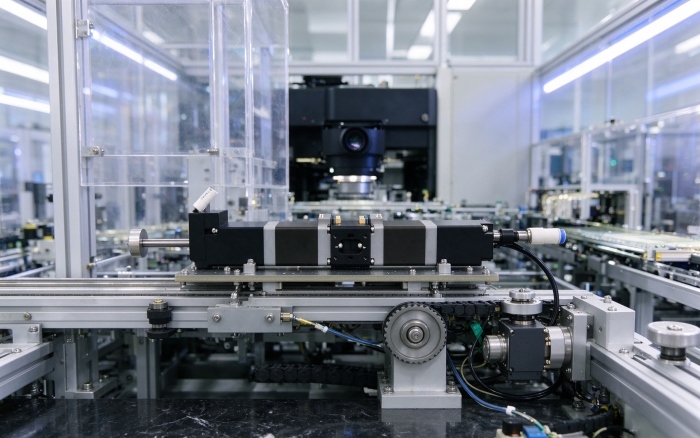
An integrated compound actuator can be considered in automation processes where compact installation and combined movement are important. The ZRCMM6-P6 Series is intended for several applications involving material placement, product processing, and small-component handling. Its application range includes:
- Labeling automation: Supports movement operations involved in positioning labels during automated processing.
- Film application: Provides motion support for film-related production and application equipment.
- Patch application: Can be integrated into machinery used for patch and adhesive processing.
- Auxiliary material application: Supports automated handling and placement of auxiliary materials.
- Micro-component handling: Suitable for equipment involving small-part positioning and transfer.
- Loading and unloading: Provides combined movement functions for automated material handling operations.
These applications often require equipment designers to consider movement speed, installation dimensions, and the characteristics of the handled materials. Therefore, selecting an actuator according to the actual process is important for achieving stable machine operation.
How Should Manufacturers Select an Electric Actuator?
When comparing an electric actuator with a pneumatic compound actuator, manufacturers should first identify the required movement type and operating environment. Different actuator technologies have different control methods and integration requirements, so the selection should be based on the machine’s motion sequence, available space, and control architecture. For applications specifically requiring compact linear and rotary pneumatic motion, the ZRCMM6-P6 Series can be evaluated as a dedicated option.
Before selecting an actuator, equipment designers should review several factors:
- Movement requirements: Determine whether the process requires linear movement, rotary movement, or both.
- Installation dimensions: Check the available mounting space and mechanical arrangement.
- Operating speed: Evaluate the movement frequency required by the production process.
- Landing requirements: Consider whether soft landing is necessary to reduce impact on delicate components.
- System compatibility: Confirm pneumatic connections, control arrangements, and installation requirements with the equipment provider.
Conclusion
Compared with traditional single-axis modules arranged as separate components, integrated compound actuators provide a more consolidated approach to applications requiring combined movement. Their potential advantages include compact installation, simplified mechanical arrangements, and suitability for high-speed automation processes. The ZRCMM6-P6 Series combines an ultra-small structure, linear and rotary motion, and soft-landing capability, making it a relevant option for labeling, film application, patch processing, and micro-component handling equipment.