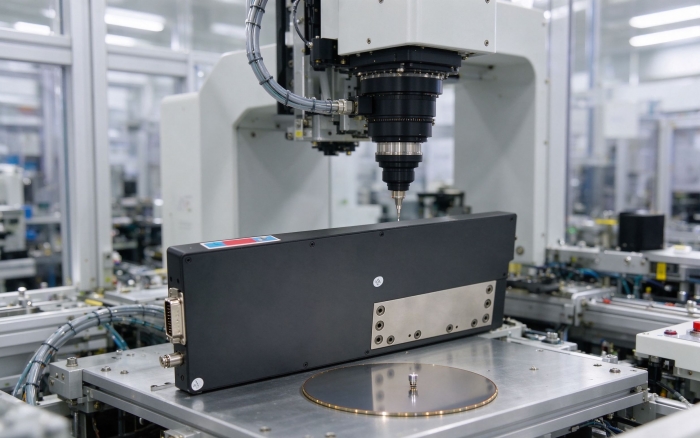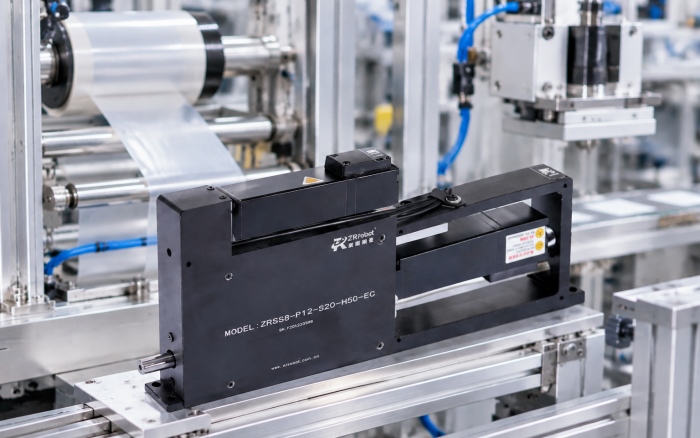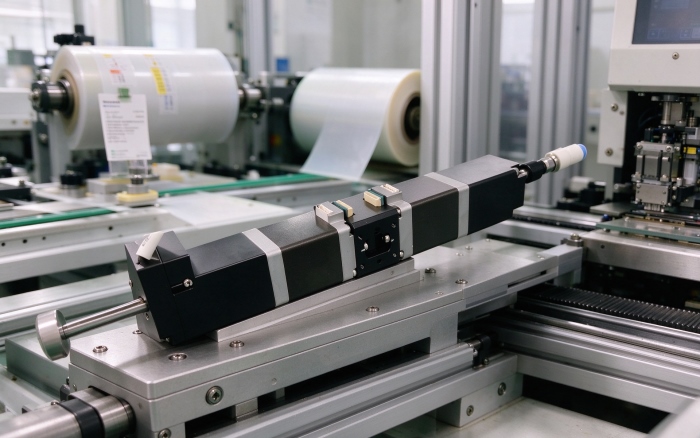


In industrial automation, precise movement matters just as much as production speed. Delicate components can suffer from impact, vibration, or misalignment when automated equipment moves too quickly or stops abruptly. Therefore, manufacturers need motion control solutions that balance fast operation with gentle handling. A soft landing linear rotary actuator helps address this challenge by supporting smoother movement during automated assembly and material transfer. With a compact structure, high-speed motion, and an optimized pneumatic circuit, the ZR axis module offers a practical option for applications that require both efficiency and careful component handling.
1. Why Soft Landing Matters in Precision Assembly
During automated assembly, even minor impacts can affect component positioning or surface quality. For example, lightweight parts, thin materials, and delicate inserts may shift or become damaged when a mechanism applies excessive force during contact. A soft landing function helps reduce abrupt contact by supporting a smoother final stage of movement. As a result, manufacturers can improve handling consistency and reduce the risk of damage during repeated production cycles. This approach is particularly valuable when equipment must maintain both a fast operating rhythm and controlled movement.
2. Balancing High Speed with Gentle Motion
High production efficiency often depends on short cycle times. However, simply increasing movement speed may create unwanted impacts when an actuator approaches a component or reaches its working position. A high speed linear rotary actuator should therefore support stable motion as well as rapid operation. By combining fast movement with a soft landing function, an automation system can reduce unnecessary impact while maintaining productive cycle times. This balance helps manufacturers improve throughput without overlooking the handling requirements of delicate materials.
3. How the Pneumatic Circuit Supports Motion Stability
The pneumatic design also plays an important role in motion performance. The ZR axis module uses a medium air path system to support stable and efficient operation. When engineers select a medium air path actuator, they should consider the complete motion sequence, including the required speed, movement pattern, and contact conditions. In addition, equipment designers should evaluate how the actuator integrates with surrounding mechanisms and the available installation space. A suitable pneumatic arrangement can help the overall assembly process operate more smoothly, although actual results depend on the machine configuration and operating conditions.
4. Key Benefits for Delicate Component Handling
A soft landing linear rotary actuator can support more controlled handling in automated production. Its value comes from combining motion stability, compact installation, and a function designed to reduce abrupt contact. Moreover, manufacturers can evaluate several practical benefits when selecting an actuator for precision assembly.
- Reduced impact during contact: Softer landing motion helps lower the risk of damage to fragile parts and sensitive surfaces.
- More consistent handling: Stable movement can support repeatable positioning throughout recurring production cycles.
- Space-efficient integration: The ultra-compact ZR axis module fits equipment layouts where installation space is limited.
- Improved production efficiency: High-speed movement can help shorten cycle times when the application allows it.
- Flexible automation use: The module can support different handling tasks, including loading, unloading, and pick-and-place operations.
These benefits can help manufacturers improve process consistency. Nevertheless, engineers should validate motion settings and handling conditions with the actual components before introducing the equipment into full production.
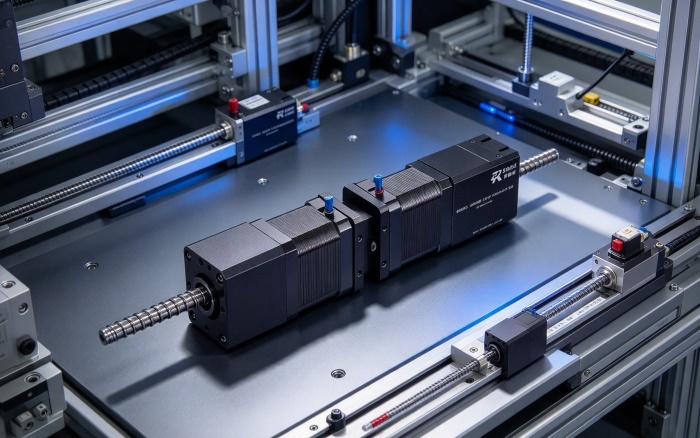
5. Product Features and Their Assembly Benefits
The compact ZR axis module combines several features that support industrial automation. The following table explains how these characteristics relate to assembly requirements without assuming unprovided performance values.
| Product feature | Description | Potential assembly benefit |
|---|---|---|
| Ultra-compact structure | Supports installation in space-limited equipment | Helps simplify machine layout |
| High-speed motion | Supports rapid movement during automated cycles | Can improve production throughput |
| Soft landing function | Helps reduce abrupt contact | Supports careful handling of delicate parts |
| Medium pneumatic system | Supports motion stability and efficiency | Helps maintain smoother operation |
| Cost-effective design | Focuses on practical value and reliability | Supports equipment cost management |
| Factory-ready integration | Designed for integration into automation systems | Helps accommodate production-line requirements |
The table highlights the relationship between product design and manufacturing needs. However, the actual benefit depends on the component type, motion profile, machine design, and operating environment.
6. Applications in Automated Assembly and Material Handling
Soft landing technology can benefit production tasks that require controlled contact or accurate material placement. For example, a linear rotary actuator for labeling can help automate positioning and application movements, where consistent handling matters for label placement. Similarly, film application, patch processing, and auxiliary material handling may require fast movement combined with controlled contact. For smaller components, a precision pick and place actuator can support automated transfer between stations, provided its motion range and handling capability match the application.
A compound linear rotary module may also suit equipment that needs coordinated linear and rotary movement within a compact space. Before selecting a module, engineers should confirm that its motion functions align with the required process and that the machine provides suitable support, control, and mounting arrangements.
7. How to Select the Right Actuator for Your Production Line
Choosing an actuator requires more than comparing speed or size alone. Manufacturers should assess the component’s sensitivity, the required movement sequence, and the available installation space. They should also review the expected production cycle and determine whether soft landing is necessary at specific contact points. Finally, testing the actuator within the intended machine helps confirm that movement remains stable and that the handling process meets quality requirements.
For OEMs and automation manufacturers, these checks can reduce integration issues and support more predictable production planning. Zrvrobot’s compact ZR axis module provides a potential option for applications that require compact installation, fast motion, and controlled handling. Engineers should confirm the detailed configuration and application suitability with the supplier before finalizing a design.
Conclusion
Protecting delicate components requires a careful balance between speed, stability, and controlled contact. A soft landing linear rotary actuator can help reduce abrupt impacts while supporting efficient movement in automated assembly. When combined with a compact structure and an optimized pneumatic system, it can meet the needs of labeling, material application, and micro-component handling tasks. By evaluating component sensitivity, motion requirements, and integration conditions, manufacturers can choose an actuator that supports reliable handling and efficient production.