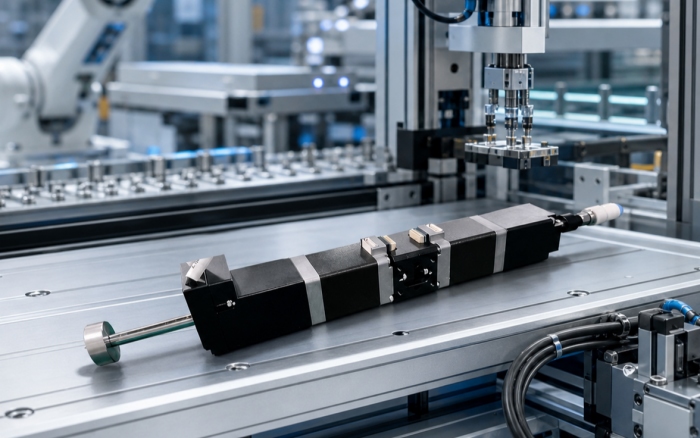


Modern industrial automation requires motion components that deliver accurate positioning, fast operation, and efficient use of installation space. However, separate mechanisms for linear and rotary movements can increase equipment complexity, assembly work, and installation requirements. A compact linear rotary actuator module integrates these movements into one unit, helping equipment designers simplify machine layouts. As a result, manufacturers can make better use of available space while supporting efficient, repeatable production processes.
The ZRBSS8-P10 Series 60N thrust linear rotary actuator combines a compact structure with a dual-servo configuration for high-speed industrial operations. In addition, its soft-landing capability and optimized pneumatic design support smooth movement when handling suitable materials. These features make the module relevant to production tasks that require coordinated motion, consistent positioning, and efficient material handling.
1. Integrated Motion Design Saves Installation Space
In automated equipment, linear movement positions a component, while rotary movement changes its orientation for the next production step. When manufacturers use separate mechanisms for these functions, they may need additional mounting brackets, connections, and control arrangements. By combining both movements, a miniature linear rotary actuator can simplify the mechanical layout and reduce the number of separate components. Consequently, equipment designers can develop more compact workstations without sacrificing the motion functions required by the application.
This integrated design is useful in labeling equipment, film application machines, and automated handling stations. For example, a production process may require a component to move into position and then rotate before the next operation begins. An integrated actuator can coordinate these movements within the available installation space. Nevertheless, engineers should confirm the required travel, rotary range, payload, and cycle time before selecting a module.
2. How Integrated Motion Can Help Control Costs
Automation costs involve more than the purchase price of a single component. Separate motion mechanisms may require additional mounting parts, wiring, installation labor, and maintenance procedures. A stepper linear rotary module may help simplify the overall design when its capabilities suit the intended task and allow engineers to consolidate motion functions. Furthermore, a simpler mechanical arrangement can reduce integration work and help manufacturers use machine space more efficiently.
However, actual savings depend on the complete system configuration. Engineers should compare the actuator’s motion capabilities, control requirements, installation needs, and operating conditions before making a decision. They should also consider maintenance access and the demands of repeated production cycles. By reviewing these factors early, manufacturers can assess the potential cost benefits without assuming that every integrated design will reduce total expenses.
3. High-Speed Operation and Soft-Landing Performance
High-speed production requires components that move efficiently while maintaining suitable handling stability. The ZRBSS8-P10 Series features a dual-servo configuration and a stated thrust of 60N for industrial automation tasks within its operating range. Moreover, its soft-landing function helps control contact during suitable operations, which can reduce sudden impact when handling delicate materials. This capability is particularly relevant when a production process requires consistent movement near a workpiece.
A precision linear rotary actuator must also match the machine’s positioning and control requirements. For example, manufacturers handling irregular inserts or auxiliary materials should consider how the actuator approaches, positions, and releases each item. Proper tooling and motion programming remain essential for repeatable results. Therefore, engineers should evaluate the complete handling process rather than relying on actuator features alone.
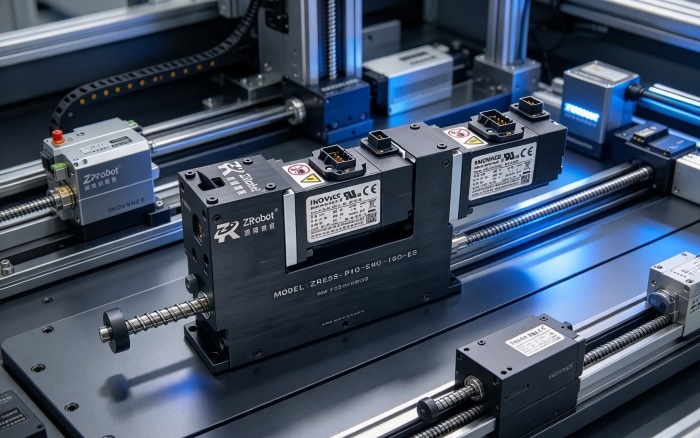
4. Key Product Specifications
The ZRBSS8-P10 Series combines a compact structure, dual-servo motion, high-speed operation, and an optimized medium pneumatic circuit. Its stated 60N thrust and soft-landing capability provide useful reference points when engineers assess the product for an automation task. The table below summarizes the specifications available in the supplied product information.
| Specification | Product Details |
|---|---|
| Product series | ZRBSS8-P10 Series |
| Product type | Linear rotary actuator |
| Stated thrust | 60N |
| Motion configuration | Dual-servo |
| Structure | Compact |
| Pneumatic design | Medium pneumatic circuit |
| Motion feature | Soft landing |
| Operating focus | High-speed industrial automation |
Before installation, buyers should confirm additional technical details, including travel, rotary range, repeatability, operating speed, mounting dimensions, and control requirements. The supplied information does not specify these values, so engineers should obtain the complete documentation before finalizing their design. This verification helps ensure that the actuator fits the machine and meets the requirements of the intended process.
5. Applications in Automated Production
A compact linear rotary actuator module can support industrial tasks that require coordinated movement in a limited space. In labeling systems, it can assist with positioning operations around the application process. Likewise, film and patch application equipment may use coordinated motion to position materials during production. Automated loading and unloading stations can also benefit when a workpiece needs to move or change orientation between process stages.
Typical applications include:
- Labeling automation: Supports positioning and handling operations within automated labeling equipment.
- Film application: Helps coordinate component movement during film placement and related processes.
- Patch placement: Supports repetitive positioning tasks in patch application workflows.
- Auxiliary material handling: Assists with moving materials between production steps.
- Irregular insert handling: Supports insertion tasks when the machine layout and tooling suit the required motion.
- Micro-component pick and place: May suit compact handling processes when payload and positioning requirements match the actuator’s capabilities.
- Automated loading and unloading: Helps transfer workpieces between stations in a production line.
For micro component pick and place tasks, system designers should pay particular attention to payload, gripper design, positioning requirements, and cycle time. Small components often require careful handling, so the actuator must work with suitable tooling and control settings. In addition, engineers should verify the product’s technical limits before applying it to sensitive or high-precision processes.
6. Choosing a Suitable Linear Rotary Actuator
When evaluating a ZR axis linear rotary module, engineers should begin with the movement requirements of the target application. They should identify the required linear travel, rotary movement, thrust, speed, and available installation space. Next, they should assess the control interface and compatibility with the existing automation system. These checks help prevent installation issues and support more reliable system integration.
Zrvrobot provides industrial motion products for automation applications, including the ZRBSS8-P10 Series. When assessing this module, manufacturers should consider its integrated motion design, stated thrust, soft-landing capability, and suitability for the intended handling task. They should also request complete technical specifications before confirming compatibility. This approach helps equipment designers balance space efficiency, operating requirements, and practical integration needs.
Conclusion
Integrated linear and rotary motion can help simplify machine layouts and make better use of installation space. It may also reduce mechanical complexity when one module can perform tasks that would otherwise require separate components. However, the actual benefits depend on application requirements, control design, tooling, and verified technical specifications. For manufacturers developing compact automation equipment, the ZRBSS8-P10 Series combines dual-servo motion, a stated 60N thrust, high-speed operation, and soft-landing capability. A compact linear rotary actuator module can be a suitable option when these features match the production process. By checking system compatibility and operating requirements before installation, engineers can make informed decisions and support efficient, consistent automation.