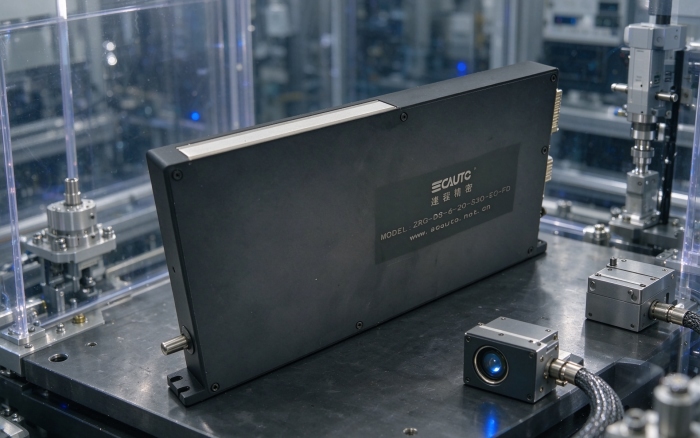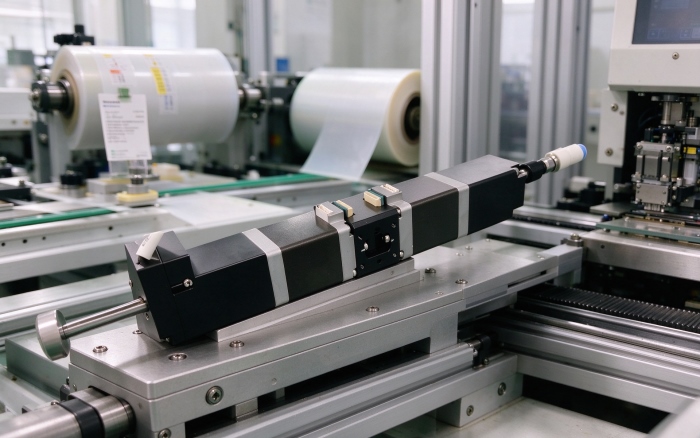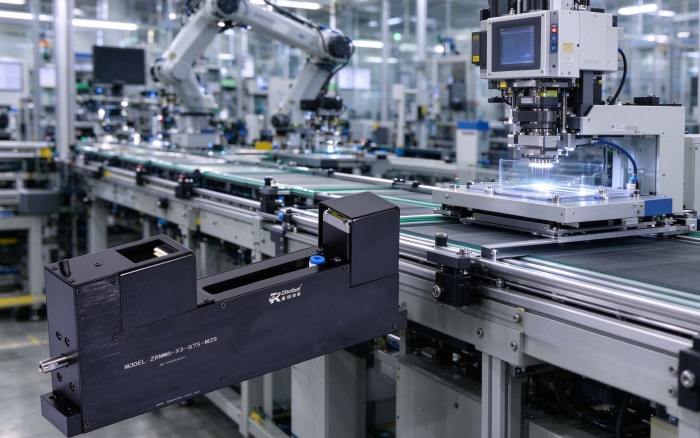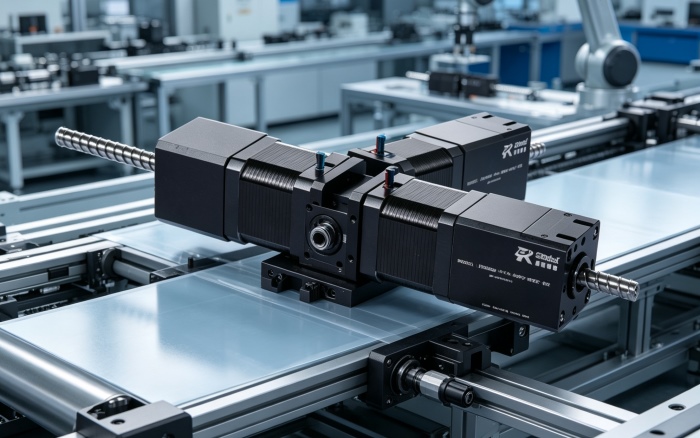


Industrial automation requires motion components that combine precision, speed, and stable force output within limited installation space. A high-thrust ZR axis module helps meet these requirements by integrating vertical and rotary movement into a compact unit. For applications such as labeling, film application, patch placement, and automated loading, this combination supports accurate positioning and controlled material handling. Moreover, soft-landing performance helps reduce impact when handling delicate materials, making the module suitable for demanding production environments.
Why Compact Compound Actuators Matter in Automation
As production equipment becomes more compact, manufacturers need motion solutions that perform multiple movements without occupying excessive space. A compact compound actuator integrates different motion functions into one assembly, helping simplify machine layouts and reduce integration complexity. In addition, combining linear movement with rotary positioning can support flexible handling processes that require precise orientation and placement. Consequently, equipment designers can develop more streamlined automation systems while maintaining consistent operation across repeated production cycles.
Key Features of the ZRBSS8-P2.5 Series
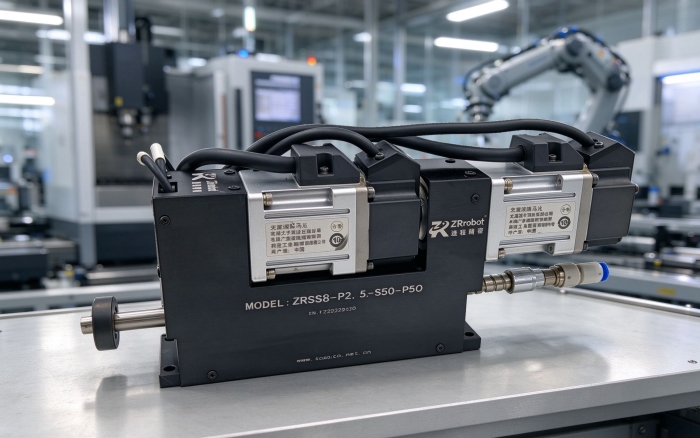
The ZRBSS8-P2.5 Series 50N High-Thrust Soft Landing ZR Axis Module combines a compact structure, dual-axis servo drive, medium pneumatic circuit, and a rated thrust of 50N. These features support controlled movement and stable positioning in industrial automation applications. Furthermore, its soft-landing function helps reduce impact during contact with workpieces, which is particularly useful when handling thin films, labels, patches, and other materials that require careful placement.
Key design advantages include:
- Compact structure: Helps integrate the module into machinery with limited installation space.
- Dual-axis servo drive: Supports coordinated motion and precise positioning during automated operations.
- 50N high-thrust output: Provides force for suitable insertion, placement, and material-handling tasks within the module’s operating limits.
- Soft-landing function: Helps minimize impact during contact with delicate workpieces.
- Medium pneumatic design: Supports controlled movement within compatible automation setups.
Together, these features help machine builders balance installation space, positioning accuracy, and handling performance.
Applications in Modern Production Lines
A high-thrust ZR axis module can support several automated processes where combined movement and controlled contact are important. For example, labeling and film application equipment can use coordinated positioning to place materials accurately, while patch application systems benefit from repeatable movement during placement. The module can also support auxiliary material application, irregular insert handling, and automated loading and unloading when configured for the specific workpiece and machine layout.
For a ZR module for laminating system integration, designers should evaluate the required travel, placement accuracy, contact force, and workpiece characteristics before selecting a configuration. Similarly, a ZR manipulator for automated production line may help streamline repetitive pick-and-place or insertion tasks by combining vertical and rotary motion in a compact assembly. Therefore, confirming the operating cycle and interface requirements early can help reduce integration issues during machine development.
Technical Overview and Selection Considerations
The following table summarizes the supplied product features and the main factors to review during integration.
| Item | Details | Application Considerations |
|---|---|---|
| Product model | ZRBSS8-P2.5 Series | Confirm compatibility with the machine layout |
| Thrust | 50N | Check the force required for each operation |
| Drive system | Dual-axis servo | Verify controller and motion coordination requirements |
| Structure | Compact design | Assess installation space and mounting interfaces |
| Pneumatic design | Medium air path | Confirm pneumatic connections and operating conditions |
| Soft landing | Supported | Evaluate workpiece sensitivity and contact requirements |
| Typical applications | Labeling, film application, patch application, auxiliary material application, irregular inserts, loading and unloading | Match the motion sequence to the production task |
These details provide a starting point for evaluating the module. However, engineers should confirm the complete technical specifications, operating range, and compatibility requirements before finalizing a system design.
How to Select the Right ZR Axis Solution
When comparing a linear rotary actuator with other motion components, engineers should consider the movement sequence, payload, working speed, installation dimensions, and required positioning accuracy. They should also check whether the application needs soft landing, how the pneumatic circuit will be connected, and whether the controller can coordinate the required servo movements. In addition, verifying compatibility with existing machinery helps prevent unnecessary redesign and supports a smoother commissioning process.
A qualified ZR module manufacturer should be able to clarify technical specifications, installation requirements, and application suitability. Zrvrobot provides ZR axis module solutions for industrial automation applications, helping machine builders assess motion requirements and integration needs. By matching the module to actual operating conditions, manufacturers can improve process consistency while avoiding assumptions about performance beyond the specified working range.
Supporting Efficient and Consistent Automation
Compact compound motion components can help manufacturers build production equipment that uses space efficiently while maintaining controlled movement. The ZRBSS8-P2.5 Series 50N High-Thrust Soft Landing ZR Axis Module combines dual-axis servo control, compact construction, and soft-landing functionality for suitable placement and handling tasks. Ultimately, evaluating application requirements, machine interfaces, and operating conditions allows engineers to determine whether this integrated motion solution fits their production goals.