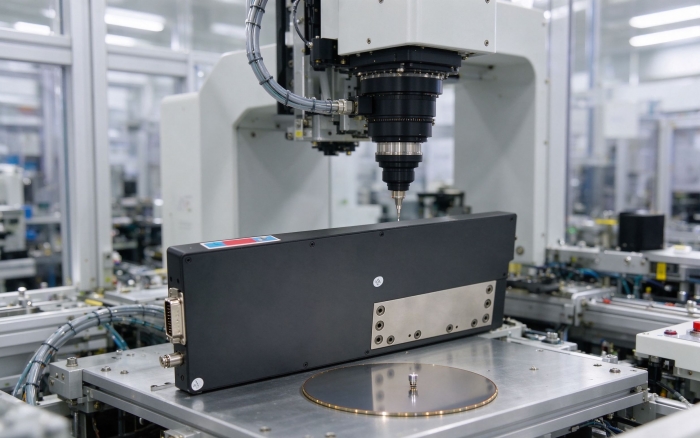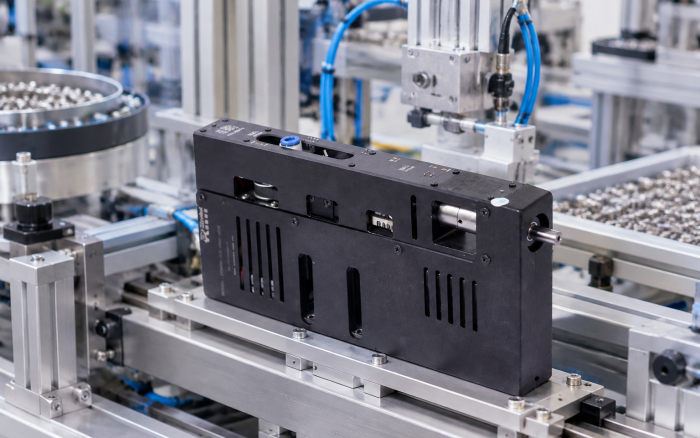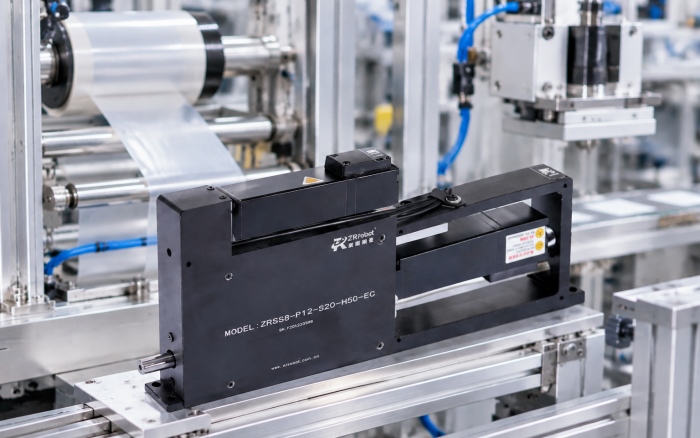


Chip sorting in semiconductor manufacturing requires accurate positioning, controlled movement, and consistent handling of delicate components. Even small deviations in vertical or rotational motion can affect chip placement and downstream processing. Therefore, manufacturers need motion control components that coordinate multiple movement directions with precision. A dual high-precision linear rotary actuator combines Z-axis linear motion and R-axis rotary motion to support accurate positioning in semiconductor and 3C manufacturing applications.
Why Are Z-Axis and R-Axis Accuracy Important?
Z-axis and R-axis movements perform different but closely connected functions during automated chip handling. The Z-axis controls vertical movement, allowing the actuator to approach, lift, or lower a component. Meanwhile, the R-axis provides rotational movement to adjust the component’s orientation before placement. When both axes operate accurately, equipment can handle small components with better positioning consistency. For chip sorting applications, these movements help coordinate component pickup, orientation adjustment, and placement. A high-precision positioning linear rotary actuator can support these operations by combining linear and rotary motion in one compact mechanism. Consequently, manufacturers can simplify motion coordination while maintaining the accuracy required for micro-component handling.
How Does Dual-Axis Motion Support Chip Sorting?
Chip sorting involves repeated handling operations in which components must be moved and positioned according to the requirements of the production process. Vertical movement helps control the distance between the handling mechanism and the component, while rotational movement adjusts its orientation. If either movement lacks sufficient accuracy, the handling process may become less consistent. Therefore, coordinated Z-axis and R-axis performance is important for automated semiconductor equipment. The ZRADS6-16.5 Series Dual High-Precision Linear Rotary Actuator is designed for demanding semiconductor and 3C manufacturing tasks. It features an ultra-light design, precise force control, high-speed operation, and high-precision Z-axis and R-axis movement. As a result, this dual high-precision linear rotary actuator can support chip sorting, semiconductor packaging and testing, and other micro-component handling processes.
What Features Improve Motion Control Performance?
The ZRADS6-16.5 series combines several motion characteristics to support precise automated operations. Its ultra-light structure helps reduce moving inertia, while precise force control supports the handling of delicate components. In addition, high-speed operation helps meet the requirements of repeated production tasks. These characteristics make the actuator suitable for applications where movement accuracy and production efficiency need to work together.
Its main features include:
- Ultra-Light Design: Helps reduce moving inertia and supports smoother movement.
- Precise Force Control: Provides controlled force during the handling of delicate micro-components.
- High-Speed Operation: Supports repeated movement in automated production processes.
- High-Precision Z-Axis: Supports accurate vertical positioning during component handling.
- High-Precision R-Axis: Enables accurate rotational positioning and orientation adjustment.
- Versatile Integration: Supports semiconductor and 3C manufacturing applications.
Together, these features help manufacturers address different motion requirements within one actuator. However, the final positioning performance also depends on the equipment structure, control system, tooling, and application-specific operating conditions.
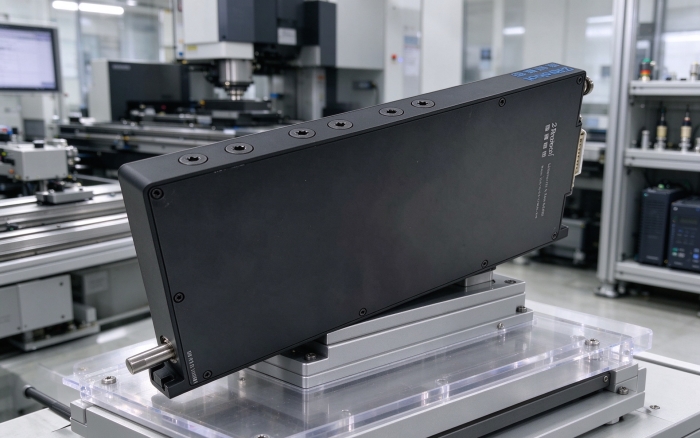
How Does the Actuator Support Semiconductor and 3C Applications?
Although chip sorting is an important application, the ZRADS6-16.5 series also supports other manufacturing operations involving small components and precise movement. In semiconductor production, it can be applied to solidification, packaging, testing, and chip sorting processes. Meanwhile, 3C manufacturing applications include labeling, film application, patch application, auxiliary material application, and micro-component loading and unloading.
The following table summarizes its main application areas and motion requirements.
| Industry | Application | Relevant motion requirements |
|---|---|---|
| Semiconductor | Chip sorting | Accurate vertical and rotational positioning |
| Semiconductor | Packaging and testing | Controlled movement and component handling |
| Semiconductor | Solidification processes | Precise motion during automated operations |
| 3C electronics | Labeling and film application | Controlled positioning and orientation |
| 3C electronics | Patch application | Accurate component placement |
| 3C electronics | Auxiliary material application | Consistent movement and force control |
| 3C electronics | Micro-component loading and unloading | Coordinated Z-axis and R-axis movement |
For these applications, an industrial-grade linear rotary actuator can help equipment designers combine vertical and rotational movement in a coordinated mechanism. Furthermore, its ultra-light design and precise force control are relevant to production environments that handle small or delicate components.
What Should Manufacturers Consider When Selecting a Linear Rotary Actuator?
Selecting an actuator requires more than checking its movement directions. Manufacturers should consider component size, required positioning accuracy, operating speed, force requirements, and the structure of the existing automation equipment. In addition, the actuator must match the handling process and control architecture of the production line.
When evaluating a linear rotary actuator manufacturer, buyers should review several practical factors:
- Application compatibility: Confirm whether the actuator suits chip sorting, packaging, testing, or 3C component handling.
- Axis requirements: Determine the required Z-axis travel and R-axis rotation for the application.
- Motion performance: Evaluate the required speed, positioning accuracy, and movement consistency.
- Force control: Consider the force requirements for handling delicate components.
- System integration: Check compatibility with the machine structure, controller, and existing automation workflow.
These considerations help manufacturers select motion components based on actual production requirements. Moreover, buyers should confirm detailed technical specifications, including travel range, rotation range, repeatability, payload, and control interface with the supplier, as these values are not included in the available ZRADS6-16.5 product information.
Supporting Precision Automation with Zrvrobot
The ZRADS6-16.5 Series Dual High-Precision Linear Rotary Actuator combines an ultra-light design, precise force control, high-speed operation, and accurate Z-axis and R-axis movement. It is designed for semiconductor applications such as chip sorting, packaging, and testing, as well as 3C manufacturing tasks involving labels, films, patches, and micro-components. Zrvrobot provides motion control products for automated manufacturing applications that require coordinated linear and rotary movement.
When selecting a dual high-precision linear rotary actuator, manufacturers should match its motion characteristics to the actual requirements of their equipment and production processes. By considering vertical positioning, rotational accuracy, force control, and integration needs together, equipment designers can develop more coordinated handling systems for semiconductor and 3C manufacturing.