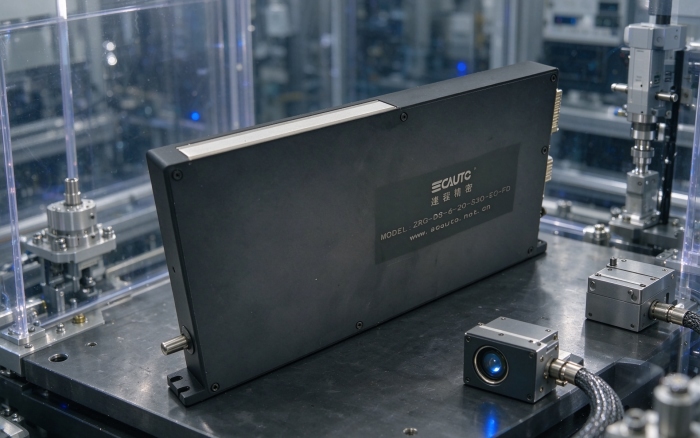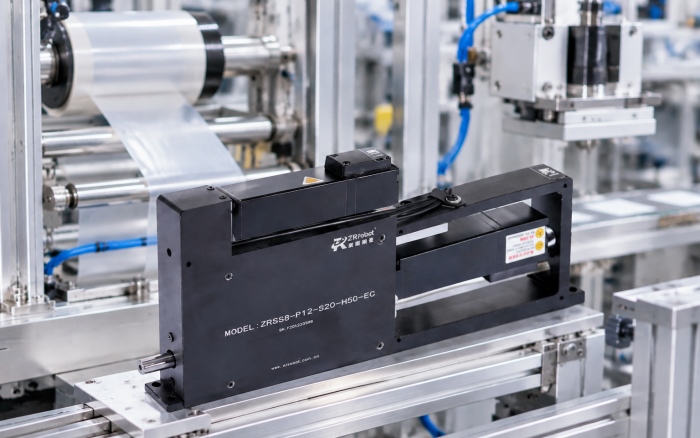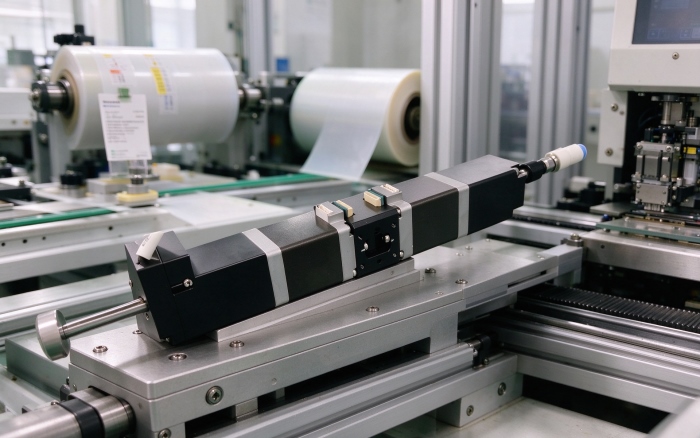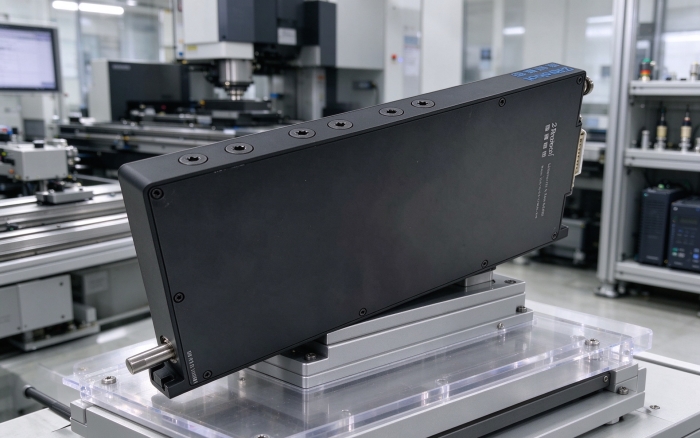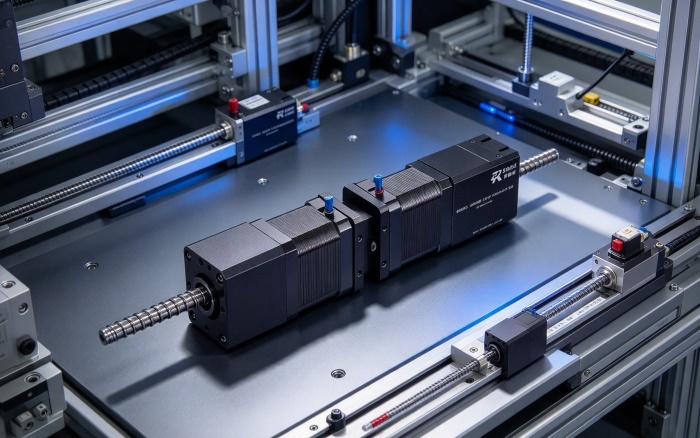


Modern automation equipment must often perform precise positioning, rotation, and component handling within increasingly limited installation spaces. In semiconductor manufacturing and micro-component assembly, these operations may also require vacuum suction to pick up and transfer delicate workpieces. An ultra-thin precise linear rotary actuator combines motion control and vacuum handling in one compact module, helping engineers reduce the number of separate components in an automation system. By integrating these functions, the ZRFDS6-15 series simplifies equipment architecture, reduces wiring requirements, and supports more coordinated motion in high-precision production environments.
How Does an Integrated Linear Rotary Actuator Simplify Equipment Design?
Traditional automation systems may use separate linear actuators, rotary mechanisms, and vacuum generators to complete a single handling process. Although this arrangement offers flexibility, it can also increase installation space, wiring connections, pneumatic or vacuum tubing, and control coordination requirements. In contrast, an integrated motion-and-vacuum architecture combines several functions within one module. Consequently, equipment designers can reduce subsystem redundancy and simplify the mechanical and electrical interfaces required for machine integration.
The ZRFDS6-15 series is designed around this integrated approach. Its compact structure combines suction control with multi-axis motion, allowing the handling process and movement sequence to work more closely together. Furthermore, reducing the number of independent modules can make equipment layouts easier to organize, especially when several handling stations operate within a confined production line. This design approach is particularly useful for machines that require repeatable positioning and coordinated vacuum pickup.
Tip 1: Reduce Wiring and Connection Points Through Functional Integration
Every additional actuator or vacuum component may introduce more cables, connectors, control signals, and installation work. As a result, complex equipment layouts can become difficult to maintain, particularly when multiple modules must operate in a synchronized sequence. An integrated actuator helps address this issue by bringing motion and vacuum functions into a shared structural unit. Therefore, an ultra-thin precise linear rotary actuator can help equipment builders reduce external connections and create a more organized wiring layout.
However, reducing wiring complexity does not simply mean removing as many connections as possible. Engineers should first identify the control signals, power requirements, and communication interfaces needed by the complete machine. They can then plan cable routing around the actuator’s installation position and the movement range of connected components. This approach helps prevent cable interference, excessive bending, and unnecessary connection points during repeated production cycles.
Tip 2: Coordinate Vacuum Handling With Linear and Rotary Motion
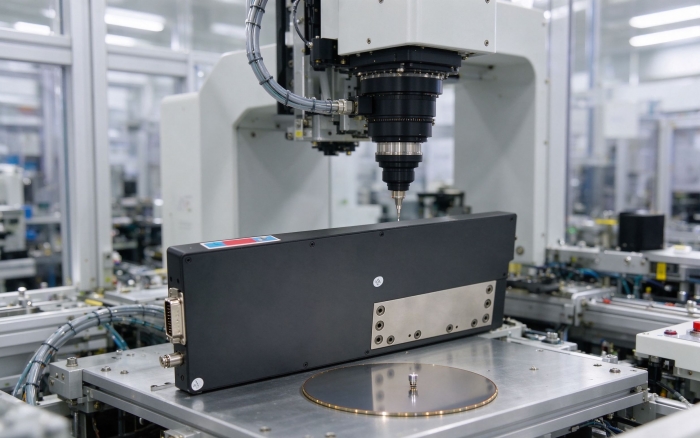
Vacuum handling and mechanical movement often need to occur in a carefully controlled sequence. For example, a machine may need to approach a wafer, activate suction, lift the workpiece, rotate it, and transfer it to an inspection or processing station. If vacuum control and motion execution rely on separate subsystems, engineers must coordinate their timing through additional control logic and external connections. By integrating these functions, the actuator can simplify the equipment architecture and support more direct coordination between handling and movement.
The main engineering benefits include:
- Fewer independent modules: Combining motion and vacuum functions can reduce the number of separate devices installed in a machine.
- Simplified control coordination: A more integrated structure can make it easier to organize movement and suction sequences.
- More compact installation: An ultra-thin architecture helps equipment designers work within restricted machine spaces.
- Reduced connection complexity: Fewer separate subsystems may mean fewer external wiring and tubing routes to plan.
- Consistent handling sequences: Coordinated motion and suction can support repeatable transfer operations when properly configured.
Nevertheless, the actual synchronization performance depends on the control system, motion parameters, vacuum response, and workpiece characteristics. Engineers should validate the complete sequence under representative operating conditions before deploying the equipment.
Tip 3: Select the Right Actuator for High-Precision Applications
Different automation processes have different requirements for positioning accuracy, movement speed, rotation, and workpiece handling. A high-precision linear rotary actuator may be suitable for applications that require controlled multi-directional movement and accurate component placement. Meanwhile, a high-speed linear rotary actuator is more relevant when production cycles place greater emphasis on rapid transfer and repeated operation. Therefore, equipment selection should consider the complete motion profile rather than relying on speed or precision as isolated characteristics.
For semiconductor equipment, the ZR module for semiconductor detection instrument applications may need to support compact installation and careful handling of sensitive components. Similarly, a ZR axis for high-speed motion device integration should be evaluated according to its movement sequence, available installation space, and synchronization requirements. For a linear rotary actuator for precision laminating machine applications, engineers should also consider how the motion path interacts with the material, alignment process, and handling method. These distinctions help prevent selecting an actuator based only on general application labels.
Key Design Considerations for Integrated Vacuum Motion Modules
Before integrating a vacuum motion module into an automation line, equipment designers should review several mechanical and control factors. The following table summarizes practical considerations based on common system integration requirements.
| Design consideration | Engineering purpose | What to evaluate |
|---|---|---|
| Installation space | Fit the module into compact equipment | Available height, mounting position, and surrounding components |
| Motion coordination | Synchronize linear and rotary movement | Motion sequence, positioning requirements, and cycle timing |
| Vacuum handling | Maintain reliable workpiece pickup | Workpiece surface, suction method, and vacuum response |
| Wiring arrangement | Reduce cable routing complexity | Power, control connections, and cable movement |
| Workpiece protection | Avoid damage during transfer | Contact area, handling force, and workpiece sensitivity |
| Maintenance access | Simplify inspection and servicing | Connector accessibility and module replacement requirements |
In addition, engineers should check the relationship between the actuator and the machine’s overall control architecture. Proper mounting, cable protection, vacuum routing, and sequence validation all contribute to stable operation. These checks are especially important in semiconductor and precision assembly environments, where workpiece handling errors can affect downstream production processes.
Typical Applications in Automated Manufacturing
Integrated linear rotary vacuum modules can support a range of applications that combine compact motion with suction-based handling. In semiconductor wafer handling systems, they can be incorporated into transfer mechanisms that move delicate workpieces between processing or inspection positions. Likewise, chip inspection and packaging equipment may use coordinated movement to position small components during automated handling. In 3C precision assembly lines, compact modules can help organize pickup and placement operations where installation space is limited.
Other potential applications include thin-film processing and transfer systems, micro-component vacuum manipulation modules, and automated labeling or placement equipment. In each case, the actual suitability depends on the workpiece, required motion sequence, vacuum conditions, and machine layout. Zrvrobot develops integrated actuator solutions for equipment builders and automation integrators who need to combine motion and vacuum functions within compact industrial systems.
Conclusion
Reducing wiring complexity in automation lines requires more than simplifying cable routes; it also involves reducing unnecessary subsystems and coordinating related machine functions. An ultra-thin precise linear rotary actuator integrates vacuum handling with linear and rotary movement, helping engineers create a more compact equipment architecture. In addition, careful selection and system-level validation can improve the coordination of pickup, positioning, and transfer operations. For semiconductor handling, precision assembly, and other space-constrained applications, integrated motion-and-vacuum design offers a practical approach to simplifying machine integration.